
City Council reaches 100-home milestone for solar and battery council home project
A project by Winchester City Council to reduce its council homes’ carbon emissions and help save its tenants money on their bills has reached its latest milestone, with new solar panels and storage batteries now installed on 100 homes.
The council has been working with Whiteley-based solar energy company UPOWA to install the energy-saving technology, with another 179 installations already planned for the coming months.
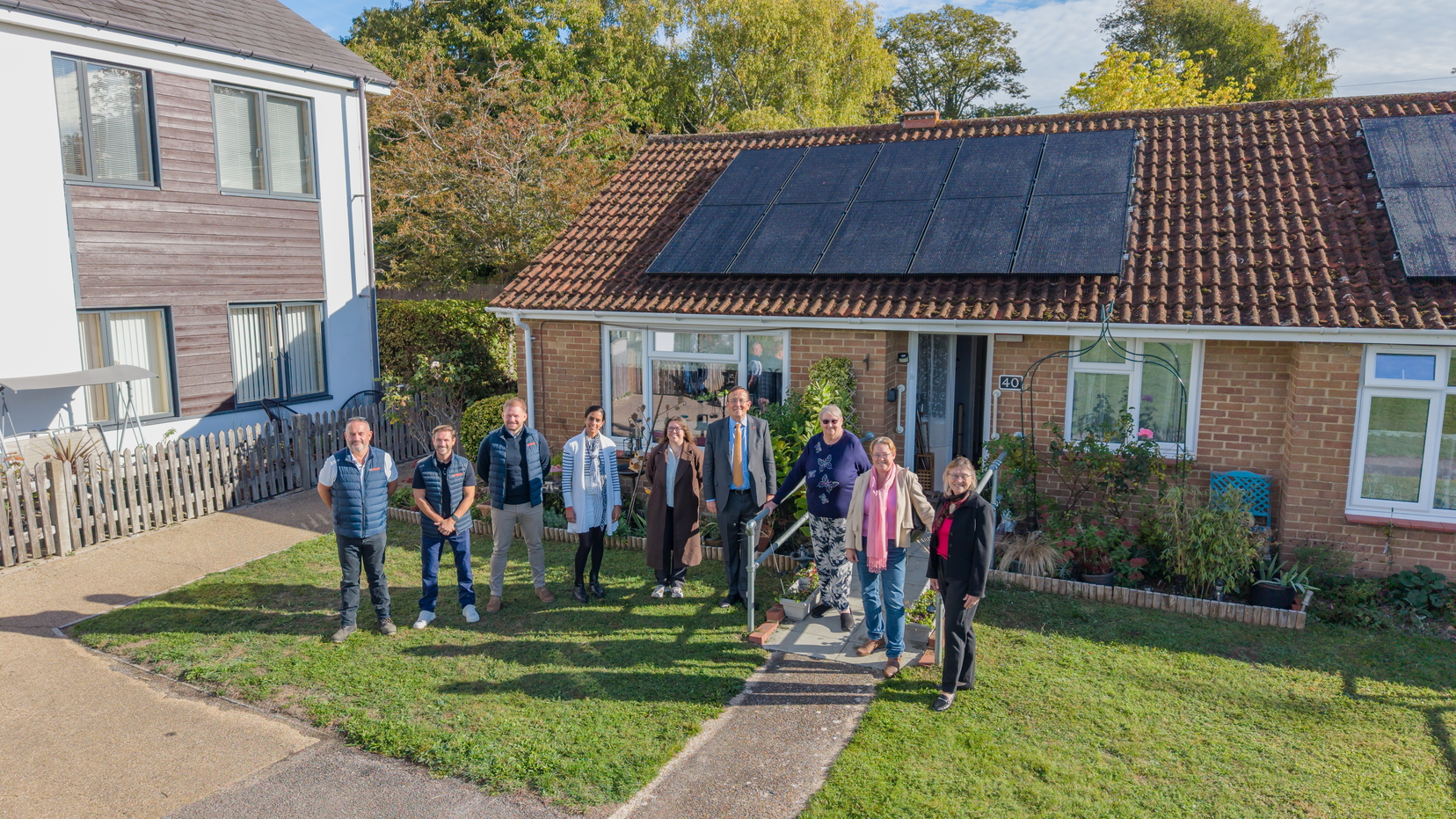
The 100th installation comes 8 months after the start of the programme, with the panels installed so far estimated to collectively generate around 2850 kWh of electricity per year, enough to boil over 14,000 kettles.
The technology will also help reduce carbon emissions by around 400kg per year - roughly the same annual amount as 19 established trees.
Winchester City Council tenants are also benefitting from the upgrades, with early results indicating that an average of 80% of tenants’ electricity needs are being met by the new systems.
After a year of operating, the money saved will be split 50:50 between the tenant and the scheme’s ongoing maintenance costs – with tenants expected to save £330 on their bills each year on average.
The council’s approach to shared savings has been recognised nationally, with the scheme being shortlisted for two separate awards.
Mrs Janet Cole, from Alresford, was the 100th tenant to have the solar technology installed on her home, alongside other improvements.
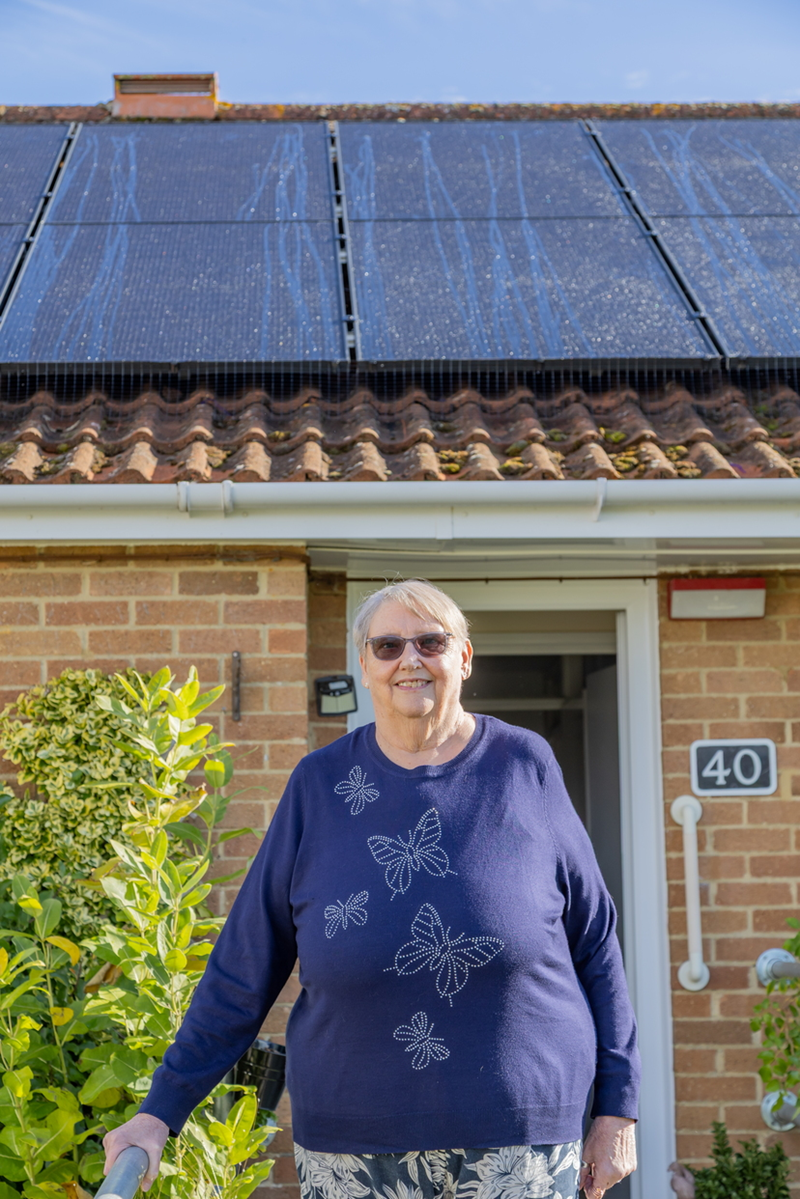
Speaking about the installation, Mrs Cole said:
“We’ve been very lucky this year, we’ve had new windows as well and so the combination of the windows and the solar panels, especially with the way fuel prices are going up, it’s one less thing to worry about.
“It’s nice to think, ‘oh I can do a bit of washing’ – you haven’t got to stop and think ‘do I need that light on’. Just something as simple as that, you know?”
“It was just painless really – they were very polite and they explained to me exactly what was going on all the time. And the chaps that put the scaffolding up, they were equally polite – I didn’t have any problems whatsoever.”
Leader of Winchester City Council Cllr Martin Tod said:
"When energy costs are soaring, it's great that we're able to use solar panels and batteries to help council tenants cut their bills."
"It's also been great that the council's Energy Saving Homes team have been able to work with a local company - UPOWA - to make it happen."
“100 homes completed in 8 months is a brilliant achievement - cutting carbon emissions and cutting bills at the same time. It's a great model that reflects the urgency of the climate crisis, the challenges of the cost of living, and also the need for the council to invest its money effectively.
And we're not stopping. It was great to chat with Mrs Cole about the 100th installation. I'm now looking to the next 100."
Paul Terry, Managing Director at UPOWA, said:
"Reaching 100 completed installations is a fantastic milestone and a reflection of the strong partnership between UPOWA and Winchester City Council.
“What's most rewarding is seeing the impact these solar and battery systems are already having for residents, helping households make greater use of renewable energy while reducing reliance on electricity from the grid.
“We'd like to thank the council, its tenants and the wider project team for their support throughout the programme, and we look forward to continuing our work together to bring these benefits to many more homes across the district."
The project is also part of a larger programme of work to make council homes more energy efficient, with a range of energy-saving measures being installed across council homes across the district, including roof and cavity wall insulation and ventilation upgrades.
The team behind the project has focused its efforts on bungalows and other homes where residents are most at risk of fuel poverty.
The council’s Energy Saving Homes programme spans from single-storey bungalows to multi-storey blocks, with the aim of reducing fuel poverty and carbon emissions by raising the EPC rating on all council homes to an EPC C.