
Invest in the Winchester district
Winchester offers a prime Southeast location, excellent connectivity to London and a highly skilled workforce. With a strong business base and high quality of life, it’s an ideal place for companies looking to scale and innovate.
Covering 661 square kilometres, our district is the second largest area in Hampshire. It is a distinctive and highly attractive place to do business, offering a unique blend of idyllic countryside, vibrant market towns, modern developments and a thriving, cultured city centre. Centrally located within the historic county results in excellent transport connections, a strong sense of place shaped by the River Itchen valley and a rich mix of heritage, culture and high‑quality educational links.

Doing business in the Winchester district
-
Why Winchester district for business
The business landscape offers a blend of historical charm and modern innovation. It boasts a diverse array of industries, from traditional sectors like agriculture and tourism to emerging fields such as technology and healthcare. The district is home to high-profile employers including IBM, Arqiva, NATS, HSBC and Zurich.
The Winchester district is home to over 8,200 business enterprises (NOMIS 2025), the population is 127,500 (Census 2021) and it ranks fifth nationally for the high employment rate of working-age residents at 87% (CoworkingCafe).
The district has unique strengths and assets, which encourage strong economic growth and provide green growth opportunities. The dynamic Winchester District Ten-Year Green Economic Development Strategy aims to ensure the district benefits from the new jobs, skills and services.
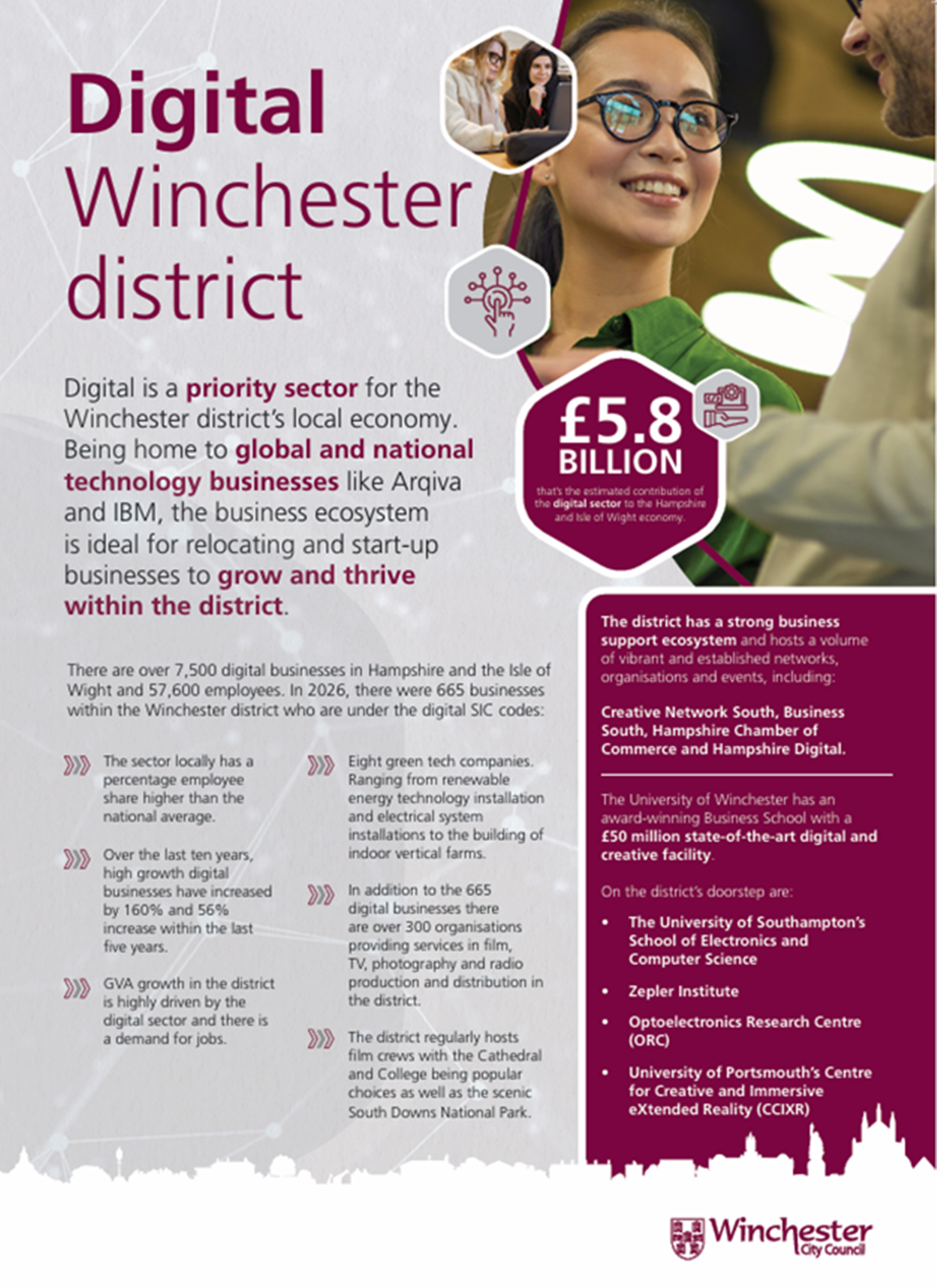
The district has become a hub for digital/technology companies and startups, drawn by its proximity to London and the South East, as well as its excellent pool of talent from the district’s two universities and excellent schools.
The district benefits from a strong agricultural sector, with fertile farmland producing a variety of crops and livestock. Local farmers markets and food festivals showcase the region's agricultural bounty, providing opportunities for small businesses and artisans.
The Winchester High Street vacancy rate went to 7.0% (January 2026) but remained well below the national rate of 13.5% (Winchester District Quarterly Economic Intelligence Dashboard, March 2026).
The Winchester district has excellent business networks: Find out more of the business networking offer here.
-
Our key sectors
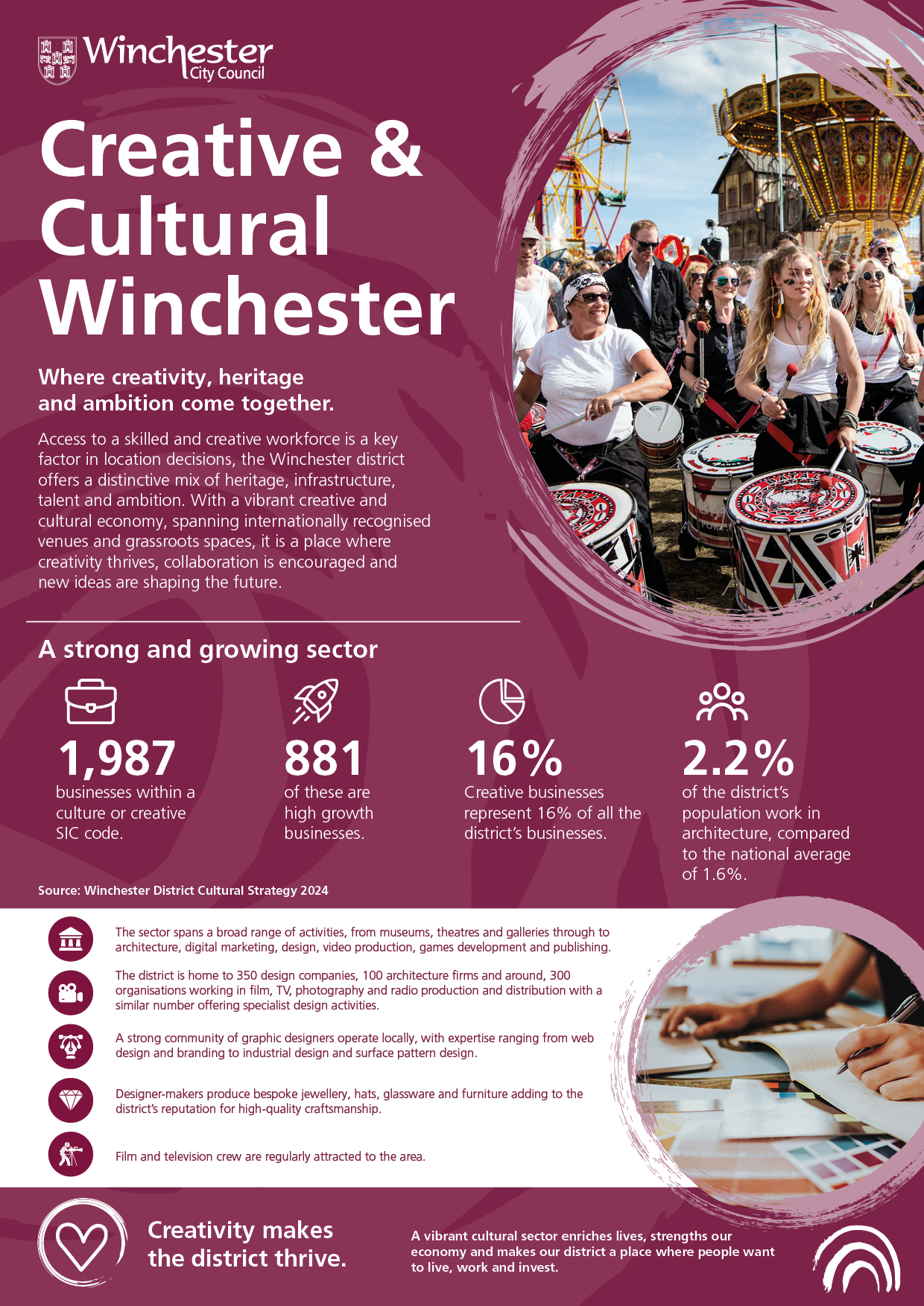
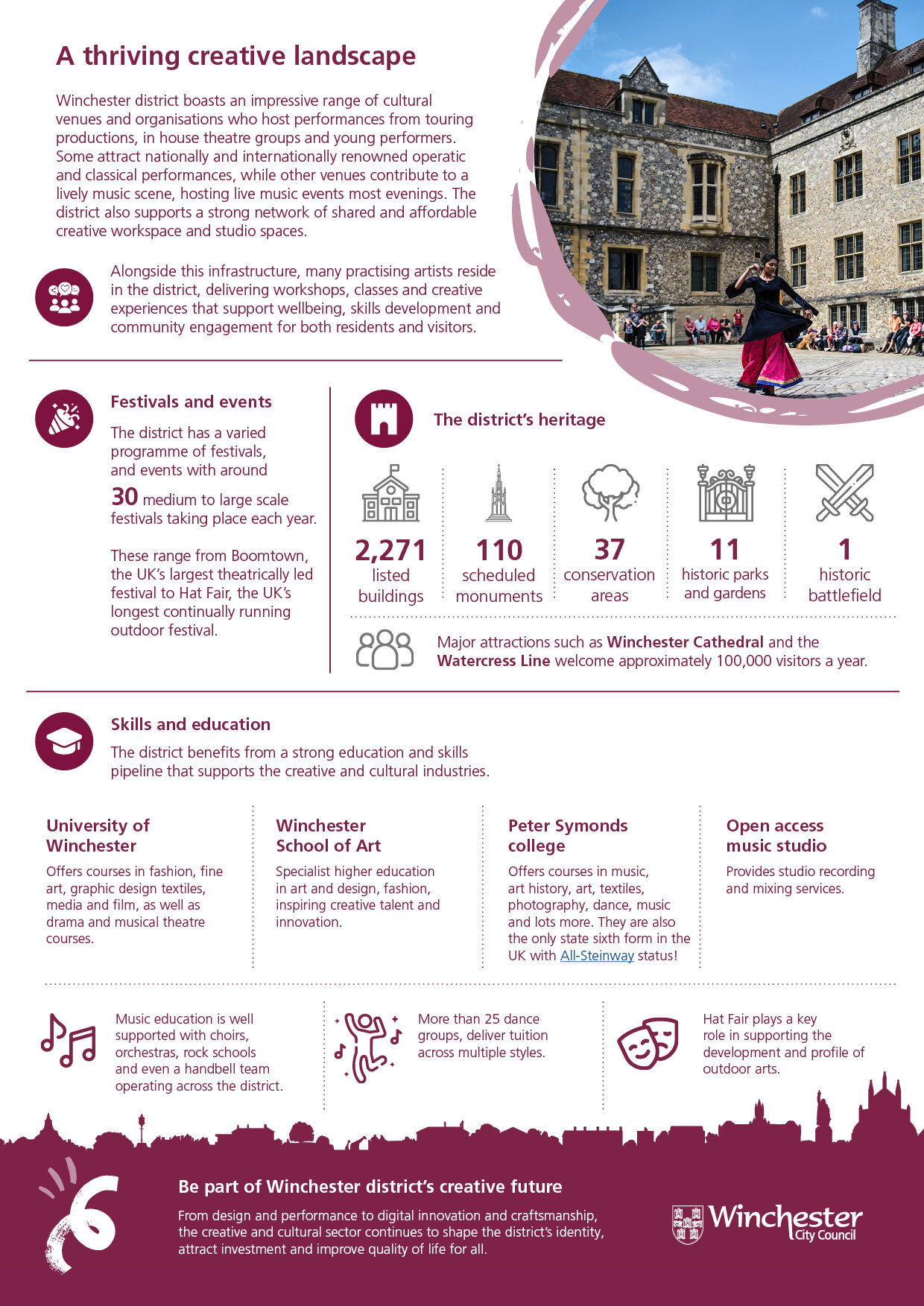
Winchester district’s economy is shaped by a strong mix of key sectors, notably digital, creative & cultural, retail, hospitality and tourism. The digital sector continues to expand, supported by growing connectivity and a workforce suited to knowledge-based industries. Alongside this, the district has a vibrant creative and cultural scene, with heritage assets, arts organisations and cultural venues contributing significantly to local identity and economic activity. Retail remains important, particularly within Winchester’s historic city centre, attracting both residents and visitors, while tourism is a major driver of the local economy, drawing on the area’s rich history, natural landscapes and year-round events. Together, these sectors create a balanced and resilient economic profile.
Digital sector
Creative and Culture sector
Retail, Hospitality and Tourism
.jpg)
.jpg)
You can download these information sheets on the right hand side of this page.
-
Highly skilled workforce
The district is home to a highly skilled workforce, supported by strong educational attainment and a concentration of professional occupations. A large share of the working-age population is economically active (around 78.4%, NOMIS 2025) and employment rates are significantly above regional and national averages, indicating a well-engaged and productive labour market. Many residents are employed in high-value, knowledge-intensive sectors, including professional, scientific and technical activities, education, finance, and information and communication, reflecting a strong base of graduate-level skills.
This skills profile is underpinned by proximity to leading higher education institutions such as the University of Winchester and the University of Southampton, which contribute to a steady pipeline of qualified graduates and research activity. Earnings levels in the district are above the national average, further reflecting the prevalence of higher-skilled roles and professional employment. Overall, the district's workforce combines high qualification levels, sectoral diversity and strong labour market participation, supporting a resilient and competitive local economy.
-
Connectivity
Transport connectivity
The district is well connected, offering easy access to London, the South East and the South Coast. Regular rail services link Winchester to London Waterloo in around an hour, while the M3 and A34 provide direct road connections to London, Southampton, Oxford and the wider motorway network. The district is also well served by nearby airports, including Southampton Airport for domestic and European flights and Heathrow Airport within straightforward reach, supporting business travel, tourism and international connectivity.

Digital connectivity
The district benefits from generally strong digital connectivity, supported by a mix of urban infrastructure and ongoing rural broadband improvements. The city of Winchester has widespread access to high-speed fibre broadband and reliable 4G coverage, with increasing rollout of 5G services enhancing mobile data speeds. Across the wider district, including more rural villages, connectivity can be more variable, but national and local investment programmes, such as fibre-to-the-premises (FTTP) expansion and government-backed initiatives, are helping to reduce digital gaps. Overall, the district is well-positioned for digital access, supporting remote work, online services and local economic growth, though some rural areas still experience limitations.
-
Are you considering bringing your business to the Winchester district?
Want to find out more about the Winchester district and why it is the ideal location for your business?
We can offer:
- bespoke support from officers who can advise on every aspect of the district
- a single point of contact that is dedicated to working with you throughout your investment journey
- links to local suppliers, professional services and partners at Winchester Business Improvement District (BID), Hampshire Chamber of Commerce and both our universities.
Get in touch with the Economy team at Winchester City Council to see how we can help: ecodev@winchester.gov.uk.
About our district
-
A district bursting with heritage, history and culture
Being England’s ancient capital, Winchester is a historic city that continues to attract visitors from around the world, supporting a strong hospitality sector. Home to iconic sites including its world‑famous Cathedral, the Great Hall with King Arthur’s Round Table and Winchester College, the city also offers a vibrant mix of shops, restaurants, theatres and cultural spaces.
The wider district enhances this appeal, combining rich heritage with the landscapes of the South Downs National Park and River Itchen valley. With extensive outdoor opportunities, a busy programme of festivals such as the Hat Fair and Boomtown, and excellent links to London and the South Coast, Winchester offers a compelling year‑round destination for visitors.
-
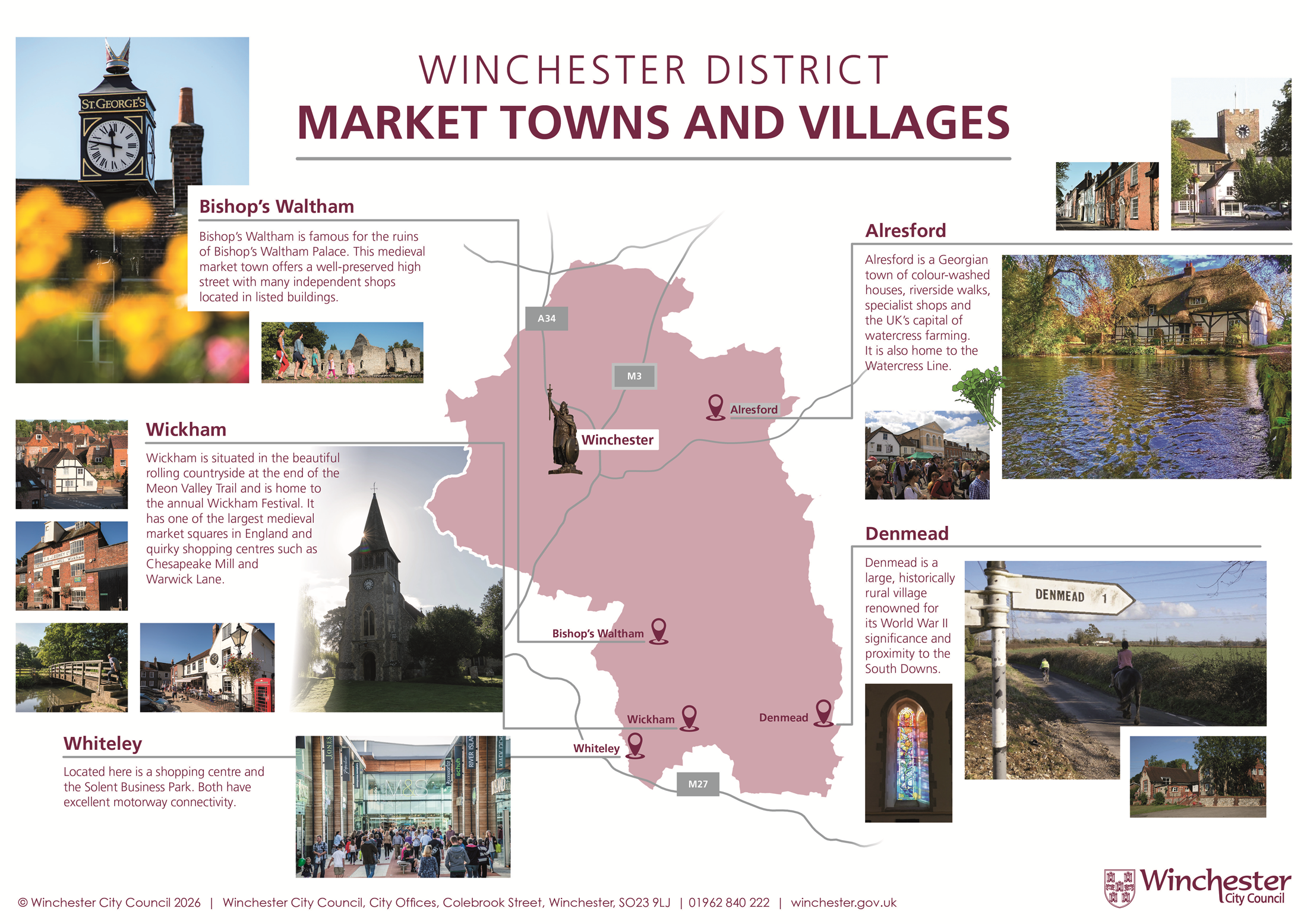
Market towns
The district is home to unique rural market towns and villages, which all have their own quirks and unique attractions:
Living in the district
The future of the district
-
Strategic regeneration opportunities
Station Approach is a development area within the city near Winchester Railway Station including the Carfax and Cattlemarket sites. Winchester City Council is currently exploring regeneration opportunities for the area. Using the agreed development principles, we aim to create a viable, local and community driven concept masterplan, that will guide the development of the area.
The council is also regenerating part of the bottom end of the town in its Central Winchester Regeneration scheme. The vision for this area is for a mixed-use, sustainable, pedestrian-friendly quarter that reflects the distinctive character of the city centre, set within attractive open spaces. The regeneration site includes Kings Walk, Friarsgate and the bus station.
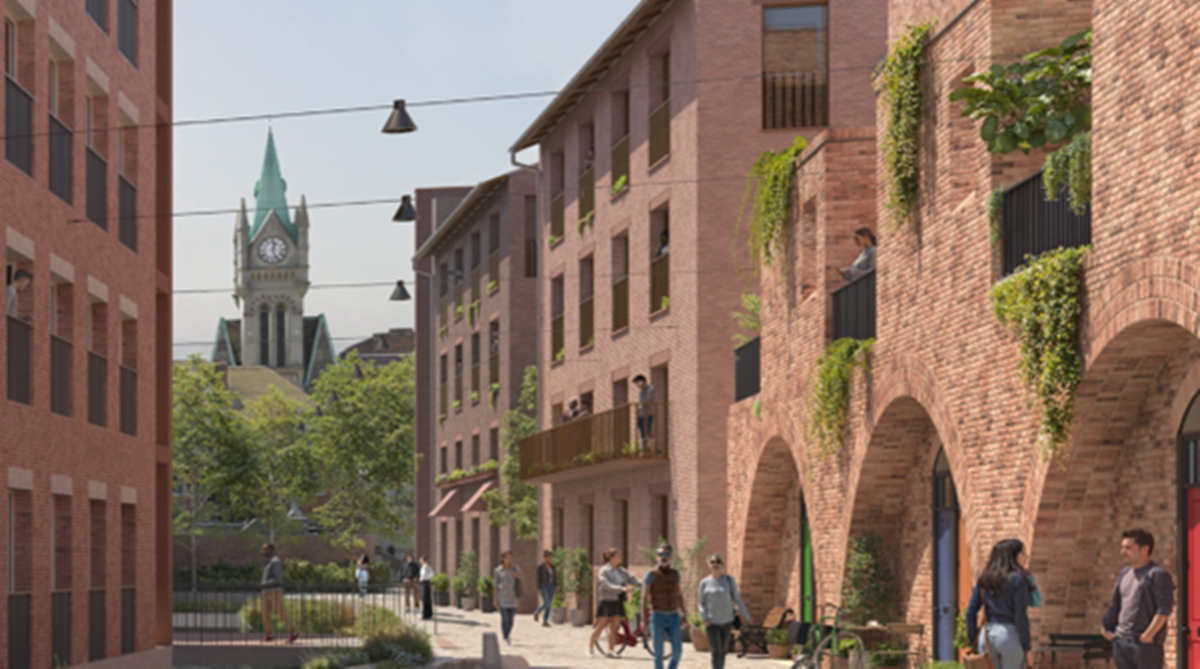
View of The Guildhall, Winchester (artist's impression) Credit: Jigsaw, Partnerships and Places Bushfield Camp is an employment-led regeneration area. A best-in-class mixed use knowledge park with inclusivity, connectivity and vibrancy at the heart, the redevelopment of Bushfield will generate a wealth of social, economic and environmental benefits for the city and wider district. Prioritising sustainability and community, around 60% of the 44-hectare Bushfield Camp site will be managed as publicly accessible and biodiverse green space.